Transform Your Money Habits with Credit Card Checkup
Personal Finance, Credit Cards, Debt Coaching
A Simple Credit Card Statement Checkup That Can Change Your Money Habits
Understanding how your credit card balance really moves each month is one of the most powerful — and gentle — ways to take back control of your money. This straightforward exercise, recommended by Nancy Ward, Financial Coach, turns confusing statements into clear information you can actually use.
Why Analyzing Your Credit Card Statements Matters
Credit cards often feel stressful because the numbers seem to jump around with no clear pattern. When you only glance at the minimum payment or due date, it is easy to miss what is really happening with your debt. That is why analyzing your credit card statements is so important: it replaces guesswork with clarity and helps you see whether your payments are truly moving you forward.
Instead of feeling ashamed or overwhelmed, this process invites you to simply observe. You are not judging yourself; you are gathering information so you can make kinder, more informed choices with your money. That is at the heart of how Nancy Ward, Financial Coach, supports clients — clarity first, then change at a realistic pace.
Step One: Gather Three Months of Credit Card Statements
Start small and specific. Choose one credit card and pull the most recent three months of statements. You can print them or open them on your computer — whichever feels easier and less stressful for you. Three months is long enough to see patterns, but short enough that the task stays manageable and not overwhelming.
As you look at each statement, notice the same key sections repeating: your previous balance, payments, interest charges, and new purchases. These four pieces are the story of how your balance grows or shrinks. The next step is to make that story visible on one simple page.
Step Two: Create Four Clear Columns in a Simple Table
Take a sheet of paper, notebook, or basic spreadsheet and create four columns labeled:
Balance
Payments
Interest
New Purchases
For each of the three months, write down the numbers for these four items from your statements. You are not trying to be perfect or technical. This is simply a gentle snapshot of what has been happening with this card over a short period of time.
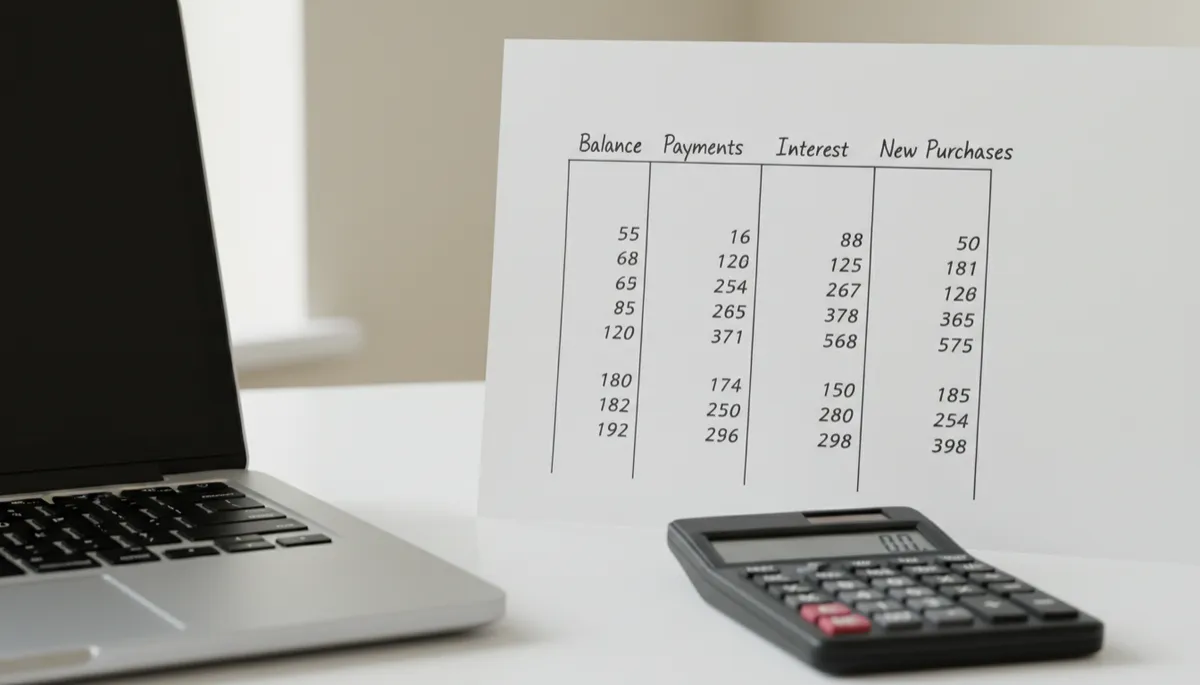
A four-column table turns a confusing statement into a clear, calm snapshot.
Step Three: Watch How the Numbers Shape Your Balance
Now comes the eye-opening part: observe how these figures influence the balance over time. Compare month to month:
When your payments are only a little higher than your interest, the balance barely moves.
When new purchases are larger than your payments, the balance climbs even if you never miss a due date.
When payments grow and new purchases shrink, the balance finally starts to drop.
This is not about blame. It is about seeing the quiet math behind your card so you can decide what you want to change — gently, and on your terms. Many of Nancy Ward’s clients say this is the first time they truly understood why their balance was not going down, even though they were faithfully paying every month.
How This Simple Exercise Builds Clarity and Motivation
When you see your numbers side by side, something shifts. The situation feels less mysterious and more manageable. That clarity often sparks gentle, realistic changes: choosing one fewer purchase on the card, adding a small extra payment, or planning a timeline to pay it off without extreme budgeting or shame.
This is exactly the kind of motivation for better financial habits that lasts, because it is based on understanding, not fear. You are no longer hoping your balance will go down — you can see what needs to happen for that to be true, and you can adjust in ways that still fit your real life.
💡 Pro Tip: Repeat this three-month review every few months. Watching your balance respond to even small changes can be incredibly encouraging.
Get Support: Weekly Debt Plan Membership and Helpful Tools
If you find this exercise helpful but want more structure and gentle accountability, consider Nancy Ward’s weekly debt plan membership. Members receive regular check-ins, simple planning tools, and compassionate guidance to keep moving forward with their credit cards and other debts — without harsh rules or unrealistic budgets.
On the website, you will also find additional tools designed to support your progress: printable worksheets, tracking templates, and resources that help you build sustainable money routines step by step. Everything is created with the same focus on practicality, clarity, and real-life flexibility.
Your Next Gentle Step
Start with one card and three statements. Give yourself time, breathe, and simply notice what the numbers are telling you. If you would like a compassionate partner in the process, you can book a free introductory consultation call with Nancy Ward, Financial Coach, through the website. Together, you can turn this simple exercise into a clear, sustainable plan that helps you feel calmer and more confident with your money.


